A NEW RUSH FOR RENEWABLES
How black pellets provide energy security against future fossil fuel shocks
The war in Iran has sent oil and gas prices soaring, as refineries and fields remain closed in many Middle Eastern countries.
With tankers stranded in the Strait of Hormuz and no viable strategy tabled to unlock the flow of energy, the economic impact of relying on fossil fuel is being felt profoundly around the world.
Households could soon face another cost of living shock, just four years after the last. Prices at the pump, home heating bills and the cost of a daily shop could climb again.
A sense of deja vu has prompted politicians to repeat their resolve to create energy independence for their respective nations. And renewables are viewed as the way out.
As problems escalated, Canadian PM Mark Carney agreed a strategic energy partnership with India’s Prime Minister Navendra Modi, including initiatives to increase their use of renewables.
Seven EU energy ministers — from Finland, Denmark, Portugal, the Netherlands, Latvia and Luxembourg — called for more investment in clean power.
This week Kier Starmer told the UK: “What gives us control is homegrown energy, which is why we should go further in relation to renewables.”
Fatefully, growing fallouts and fractures between oil states have raised the value of renewable energy.
The focus has inevitably fallen on solar and wind. But, with global demand for energy expected to double by 2050, the question to ask now is perhaps, ‘how can those intermittent, capital-intensive sources of power do the heavy lifting?’
It’s a quandary that has been considered fully by sustainability expert and CoAlternative Energy non-executive director Karen Wordsworth.
Karen was head of International Business at the Met Office – the UK’s national weather service for governments, business and public – for eight years. Then KPMG’s Director of Climate Change and Sustainability from 2011 to 2016.
As Chief Executive Officer of X-Met Ltd Karen now partners with sustainable mining, chemical extraction and clean energy companies. She also advises Cambridge University’s Cambridge Centre for Climate Change Mitigation Research on the economics of low-carbon pathways.
Describing herself ardently as “not a tree-hugger for the sake of being environmentally friendly,” Karen urges the importance of renewable energy projects making sound financial sense.
There’s little she doesn’t know about applying the right renewable energy to problems faced by nations switching to modern sources of power.
“We're in a changing world and it's very volatile,” she insists. “We need to find a way of protecting ourselves and our family, because it always comes down to me and mine. That’s how people think.
“They have had enough of sustainability and being woke. The people in my space, who live this every day, understand that.
“Demand that's coming from datacentres and AI produces an enormous challenge for sustainability to take a key role in energy production. How are we going to power them?
“When the wind is blowing and the sun shines, we can create power. When the wind doesn't blow or we have snow, they’re not the base load.
“Are we going to have periods of time where we can't use things at home because other things are using grid power? Are we going to have blackouts? If you're looking for sustainability, you need reliability.

“The French have nuclear. The UK turns to gas, although Mr Miliband wants to turn that off within five to ten years. China is opening two or three coal-fired power stations a day. India is doing the same.
“If you're looking at a resilient, renewable, sustainable, traceable product, then you've got one in black pellets from Canada.
“With black pellets, we have that base load. The product can be stored outside without worrying about infiltration of water. There’s no need to create big silos. So, as a resource, it can be stockpiled for emergencies like this one.”
But biofuel pellets have so far been overlooked in intensified conversations about future renewable energy mixes and security.
Asked why politicians and energy agency officials aren’t bringing them to the fore, Karen Wordsworth has a straight answer.
“Biomass has had a lot of bad press, and deservedly so. The waters have been muddied by shipping virgin timber, pelletised, from Canada to burn in power stations.
“And while energy companies are subsidised to do that, it isn’t ethical or economical.
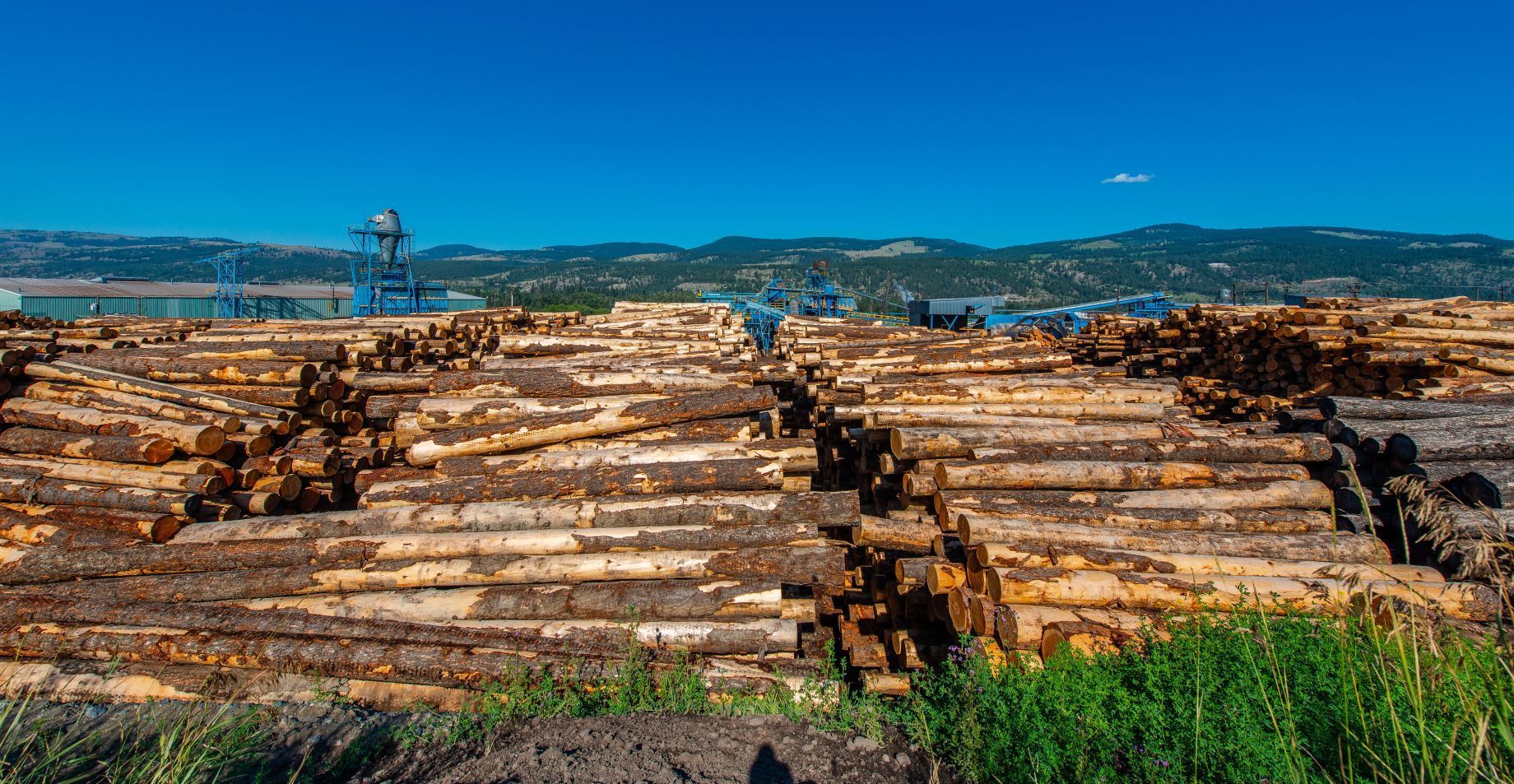
“We are doing something with fire-damaged timber that has very little other use. It's an issue all around the world and we’ve now got a solution for it with steam explosion.
“From it, we are creating natural, energy-dense fuel that prevents pollution from coal, and we aren’t changing what we're doing already too much.
“The raw materials are there. We're using infrastructure that's already there, whether it's in Japan, the UK or wherever. It’s a model that doesn’t need subsidies, so it’s highly transferable.
“We're not reliant on the wind blowing. We're not reliant on the sun shining. We're not reliant on massive subsidies. And we can provide that reliability and resilience.
“Steam explosion black pellets have a real role to play.”