SOLVING THE FOOD CRISIS WITH SUBSTRATE
How a fertiliser time bomb can be diffused with nutrient-rich deadwood
FEARS are mounting over the availability and affordability of artificial fertilisers needed to produce enough sustenance for the planet.
A third of global nitrogen-based fertiliser originates from The Middle East, and farmers depend on it to produce a sixth of the world’s food.
But, for twelve weeks, almost none – including NPK mixes, and the urea and ammonia needed to make them – has departed the Gulf region due to conflict.
Twenty percent of the world’s liquefied natural gas, used to produce fertiliser elsewhere, is also trapped.
And China, the world’s other fertiliser hub, has written emergency legislation to protect its farmers and agriculture sector – restricting exports of nitrogen-potassium and phosphate fertilisers, and sulfuric acid, until further notice.
The consequence of these developments for the world is the prospect of an unprecedented food crisis.
International bodies, agricultural leaders and economists have sounded the alarm about impending and catastrophic shortages of fertiliser and food.
UN director Jorge Moreira da Silva said this month of the developing emergency: “We may witness a crisis that will force 45 million more people into hunger and starvation.”
Secretary-general of the International Chamber of Commerce John Denton explained: “Everyone thinks about oil and gas, but fertiliser is actually what will cause the biggest human suffering. You’re not seeing the human consequences of it yet. This starts to become visible in about three months.”
The World Bank predicts average global fertiliser prices will rise by more than 30 percent in 2026, but the price of urea has already jumped 50 percent since March. In Canada, some fertiliser prices have risen by 40 percent.
India, the world’s largest rice producer and second-biggest wheat grower, recently scrambled to pay twice the usual market price for a record amount of urea in one tender. But in the bread baskets of poorer Africa, Asia and Latin America, fertiliser is now unobtainable or ruinously expensive.

The American Farm Bureau Federation recently reported that seven out of ten US farmers are unable to afford all the fertiliser they need. So, the US Department of Agriculture is forecasting the country’s smallest wheat crop since 1919.
Global food shortages and sky-high food prices seem inevitable. Famine, disease and civil unrest seem possible. And humanity’s addiction to fossil fuel-based fertilisers is the root cause.
As some leaders seek recourse for impending scarcity, the long game for food security is best played out in fields turned over to regenerative agriculture.
Clearly, growers can no longer rely on perennially steeping sapped soils in artificial fertilisers to feed the world. That chink in the chain of our food supplies has now been exposed for placing millions in peril.
More sustainable farming is needed. Sowing greater resilience into farmland with remedial substrates and organic fertilisers – to rebuild soil structures and recharge soil health – is the far-sighted fix for our food security.
Speaking in Rome this month, the UN’s Food and Agriculture Organization Director-General Qu Dongyu emphasized reduced dependence on fossil fuel-based fertilisers.
He urged nations attending its “Supporting Food Security and Access to Fertilisers” conference to invest in sustainable agriculture and innovative fertiliser technologies.
Nestlé Group Head for Sustainable Agriculture Pascal Chapot also said this month: “Regenerative agriculture is increasingly being recognized not only as an environmental solution, but as a core resilience strategy for agricultural systems and supply chains. The only way for farmers to mitigate agricultural volatility caused by fertiliser shocks is to improve soil performance permanently.”
Farmers employing regenerative agriculture inevitably use much lower volumes of chemical fertiliser, in more precise ways. Porous, carbon-rich substrates integrated into soils between crop cycles secure strong crop yields.
Ones made from wildfire deadwood offer model nutrient levels and ideal pH balance. They provide capacious water retention, resuscitating soil aeration and optimal physical structure for rapid root development and relentless plant growth.
Substrates made from fire-damaged timber are an ideal growing medium for almost all agricultural produce. And, globally, 400 million hectares of forest roasts in wildfires every year.

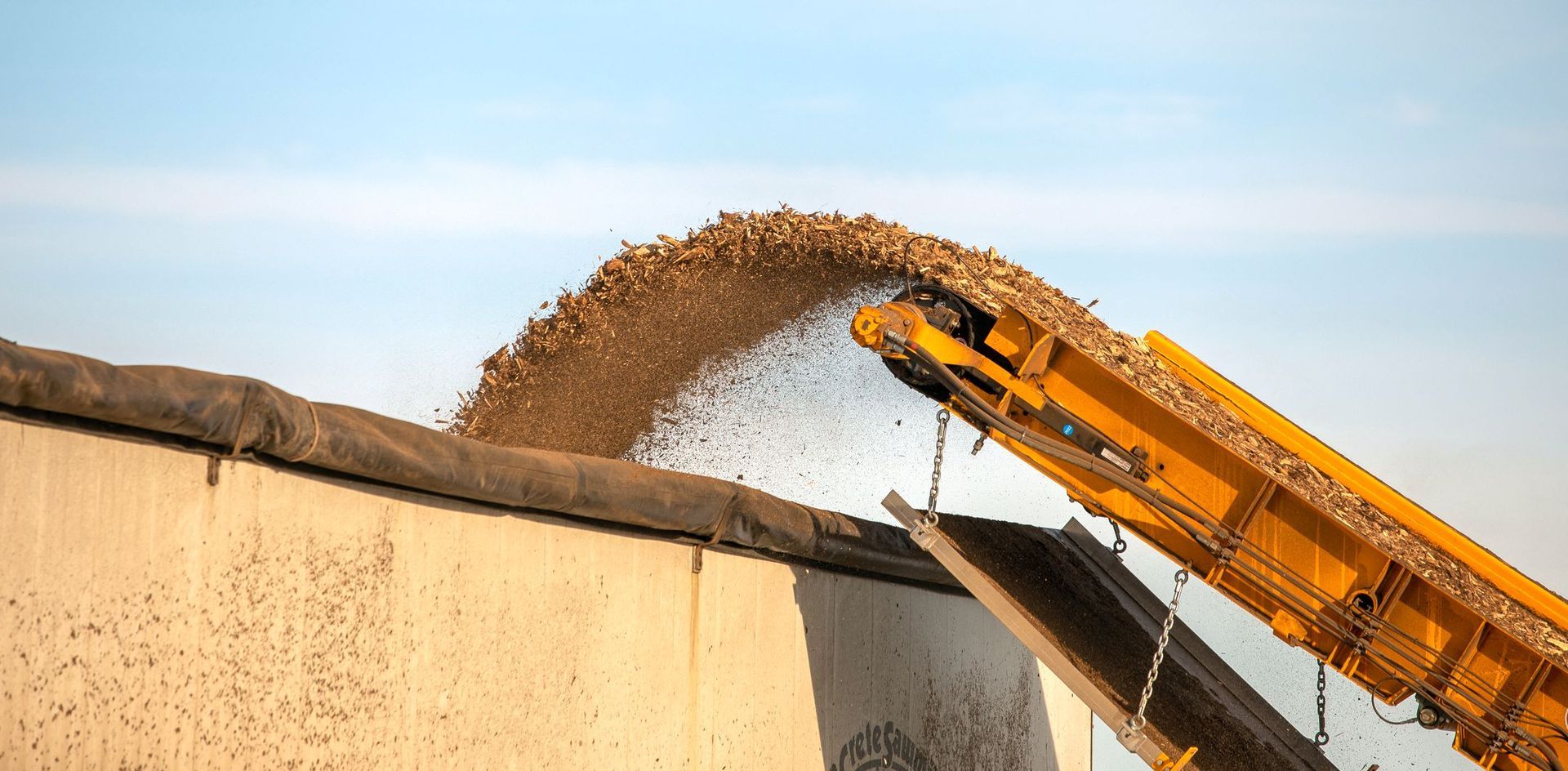
CoAlternative Energy manufactures remedial soil substrate SuSo® from wildfire-damaged aspen deadwood, harvested in Canadian forests.
Mineral-dense SuSo® substrate is generated using NATO-approved advanced transformation technology that shreds, dehydrates and pasteurises wildfire wood chip into carbon-heavy substrate.
The ground-breaking rapid decomposition process, which occurs in a Converter® AG2000 developed by X-MET, recovers nutrients that would be lost through natural waste.
Lab tests by leading science group Cawood show SuSo® has the full spectrum of macro and micro nutrients needed for large harvests.
Rich in nitrogen, phosphorous, potassium, calcium, magnesium, sodium, copper, zinc, iron and manganese, it excels in producing fruit, vegetables, herbs and cereals with high disease resistance.
When integrated into arable soils between crop rotations, each percentage increase of carbon content locks in a further 168,000 liters of water per hectare – reducing run off and irrigation costs.
Waste wildfire wood’s diversion to agriculture also prevents decomposition greenhouse gases reaching Earth’s atmosphere from forests.
CoAlternative Energy’s non-executive director Karen Wordsworth is also CEO of X-MET.
Karen described CoAlternative’s finished SuSo® substrate product as “a powerfully curative, carbon-rich soil enhancer with an abundance of nutrients needed for augmented crop growth.”
The sustainability expert said: “SuSo® is made from the sap and heart wood of ancient aspen trees that have baked in the heat of Canadian wildfires before being harvested.
“As a result, SuSo®’s carbon content is extremely high and, once sown into soils as a remedial substrate, it promotes robust, vigorous, disease-free farm crops.
“SuSo® also provides mechanical benefit to soils. It increases their moisture retention, locks in carbon and releases its nutrients slowly and consistently back into the land for stabilized high crop yields.
“It is an advanced fibrous compost that for regenerating soil vitality but it also offers a potent replacement for artificial fertilisers that are at present hard to come by.”